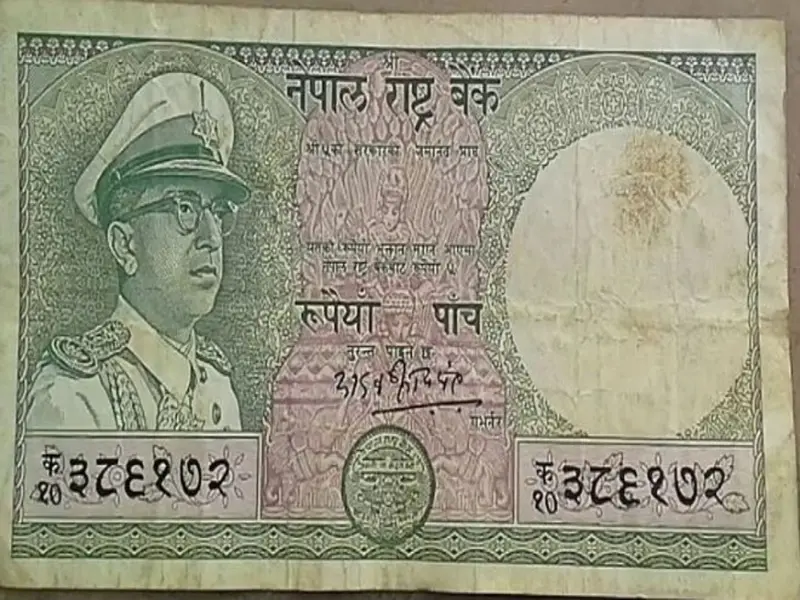
In a significant move deepening its economic footprint in South Asia, China Banknote Printing and Minting Corporation has officially signed a contract with the Government of Nepal to design and print 430 million pieces of Nepal’s Rs 1,000 denomination banknotes, officials confirmed on Friday.
According to the Nepal Rastra Bank (NRB), the state-run Chinese company was issued a Letter of Intent (LOI) to undertake the project, valued at $16.985 million (approx. Rs 142 crore). The contract was awarded based on the lowest evaluated bid, according to Nepal’s Currency Management Department.
“The company will design, print, and deliver the notes as per the terms agreed upon in the LOI,” an NRB official told PTI.
This marks another major collaboration between Kathmandu and Beijing, as the same Chinese firm has previously printed Nepalese Rs 5, Rs 10, Rs 100, and Rs 500 denominations.
💴 China’s Expanding Influence in Nepal’s Economy
The deal is being closely watched in New Delhi and global diplomatic circles, as China continues to expand its political and economic reach in Nepal, a country traditionally within India’s sphere of influence.
Beijing has steadily strengthened its presence through infrastructure projects, trade partnerships, and strategic collaborations under its Belt and Road Initiative (BRI).
Analysts in Kathmandu note that the currency printing deal could deepen China’s institutional influence in Nepal’s financial systems — an area once dominated by Western or Indian printing firms.
India, which shares deep cultural, religious, and diplomatic ties with Nepal, views such moves with suspicion, fearing they could undermine its strategic position in the Himalayan region.
“This deal symbolizes more than just money — it’s about influence,” said a senior South Asia analyst. “China is embedding itself in Nepal’s governance and financial structure at a time when the country is politically fragile.”
🔥 Background: Nepal’s Gen Z Protest and Political Upheaval
The announcement comes just days after Nepal was rocked by massive nationwide protests, dubbed the “Gen Z Revolution.”
The unrest, led primarily by young Nepalese citizens, forced Prime Minister KP Sharma Oli to resign following weeks of violent demonstrations. Protesters accused the government of corruption, censorship, and inequality, after it blocked 26 social media platforms — including Facebook, Instagram, YouTube, WhatsApp, and X — on September 4.
Several ministers were attacked or chased from their homes, and key government buildings, including the Parliament, PM’s residence, and the President’s house, were set ablaze. Tragically, Rajyalaxmi Chitrakar, wife of former PM Jhalanath Khanal, died after protesters torched her home.
While calm has since returned, the new leadership faces an uphill task restoring stability, digital freedom, and trust in governance — even as foreign powers like China seek deeper engagement.
🌍 Geopolitical Implications
The timing of China’s new deal has drawn sharp attention. Experts suggest that Beijing’s economic intervention during a period of political transition could reshape Nepal’s alliances, potentially tilting the balance of power away from India.
With Nepal struggling to rebuild after political chaos, and China positioning itself as an economic savior, Kathmandu’s next moves could redefine Himalayan geopolitics in the years ahead.