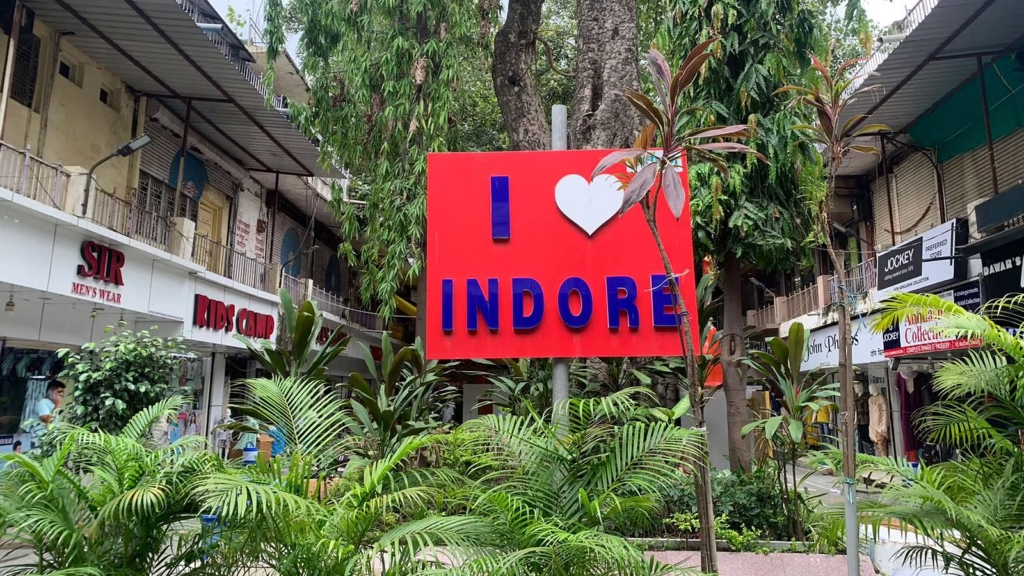
Indore, often known for its rich food culture—especially the iconic poha and jalebi breakfasts—has once again outshined other cities to claim the crown as India’s cleanest city. In the latest edition of the Swachh Survekshan cleanliness survey, the city bagged the top rank for an unprecedented eighth consecutive year. This victory isn’t just about aesthetics—it reflects years of strategic planning, dedicated civic action, and consistent community engagement.
The results, announced on a grand stage in New Delhi, placed Surat and Navi Mumbai in second and third positions, respectively. Meanwhile, Noida earned recognition as the cleanest city in the 3–10 lakh population category, followed by Chandigarh and Mysuru. President Droupadi Murmu felicitated the winning cities in a prestigious ceremony attended by top government officials, including Union Housing and Urban Affairs Minister Manohar Lal.
So, what makes Indore such a standout? Here’s a detailed look into how the city has turned cleanliness into a way of life and a model for others to emulate.
100% Door-to-Door Waste Collection & Segregation at Source
One of the cornerstones of Indore’s cleanliness mission is its door-to-door waste collection system, which operates across all residential and commercial zones. But Indore takes it a step further by enforcing six-way segregation—wet waste, dry waste, plastic, e-waste, sanitary, and hazardous. Residents are educated and expected to separate their waste at source, making the job of waste processing plants more efficient.
This meticulous segregation ensures that nearly all waste collected is sent for treatment on the same day, leaving no room for accumulation or decay. It’s an approach rooted in responsibility and cooperation between citizens and authorities.
Advanced Waste Processing & Green Energy Conversion
Indore is not just about collecting waste—it’s about transforming waste into resources. The city runs a large Gobar-Dhan bio-CNG plant that processes over 600 tonnes of organic waste every day. This plant produces bio-CNG that fuels public transport and is also available at subsidised rates for residents.
Dry waste like plastic is meticulously sorted and recycled, with some types even converted into fuel. Garden waste is processed into compost or repurposed via mobile composting units. These decentralised, local solutions help reduce the environmental footprint and promote self-sufficiency.
Smart Infrastructure & Real-Time Monitoring
Technology is a key enabler of Indore’s success. The city employs a GPS-enabled fleet of garbage collection vehicles, ensuring that no area is missed. A centrally located command centre monitors real-time progress and addresses bottlenecks as they arise.
Indore also makes efficient use of treated water from sewage plants to run water-misting road sweepers that clean roads during night shifts. This not only keeps the city dust-free but also conserves precious water resources.
Zero-Waste Zones & Behavioural Change Campaigns
Indore has transformed several areas—including slums, markets, wards, and even temples—into “zero-waste zones.” These are communities that follow best practices in segregation, composting, and recycling.
Innovative campaigns like “Bartan Banks” promote reusable utensils in public functions, eliminating single-use plastics. “Jhola Banks” encourage the use of cloth bags, while plastic buyback schemes and public pledges build a sense of accountability. One unique feature is the use of “Swachhta Anthems”—catchy songs played on garbage trucks that raise awareness and instill pride in cleanliness.
Active Citizen Participation & Strict Enforcement
Civic participation is at the heart of Indore’s strategy. NGOs work closely with the Indore Municipal Corporation (IMC) on campaigns for rainwater harvesting, clean air, and zero-waste public events. Schools, shopkeepers, housing societies, and temples routinely participate in cleanliness competitions and awareness drives.
To ensure compliance, CCTV cameras monitor littering hotspots, and violators are fined. IMC even goes as far as terminating staff who repeatedly fail to meet cleanliness standards. This strong mix of reward and enforcement ensures lasting results.
Innovation in Services & Sustainability Drives
Indore continues to lead with innovations. A soon-to-be-launched 311 mobile platform will allow residents to request waste pickups on demand and access transparent billing services.
In early 2025, the city rolled out an energy conservation campaign that saved over 1.5 crore electricity units and reduced 12,000 tonnes of CO₂ emissions in just 100 days. This was achieved through community-level initiatives like rooftop solar panels, LED conversions, and smart energy practices—showing that Indore’s commitment to sustainability goes beyond cleanliness.
A National Benchmark in Urban Cleanliness
Indore’s eighth consecutive win in the Swachh Survekshan survey is more than just a statistic—it’s a symbol of transformation. From using waste to power public buses to motivating citizens through music and local campaigns, the city has redefined what it means to be clean in urban India.
As other cities look to emulate Indore’s model, one thing becomes clear: cleanliness is not just a municipal responsibility—it’s a cultural shift that involves everyone, every day. Indore proves that with the right mix of innovation, discipline, and public participation, any city can become a cleaner, greener, and more liveable space.

